

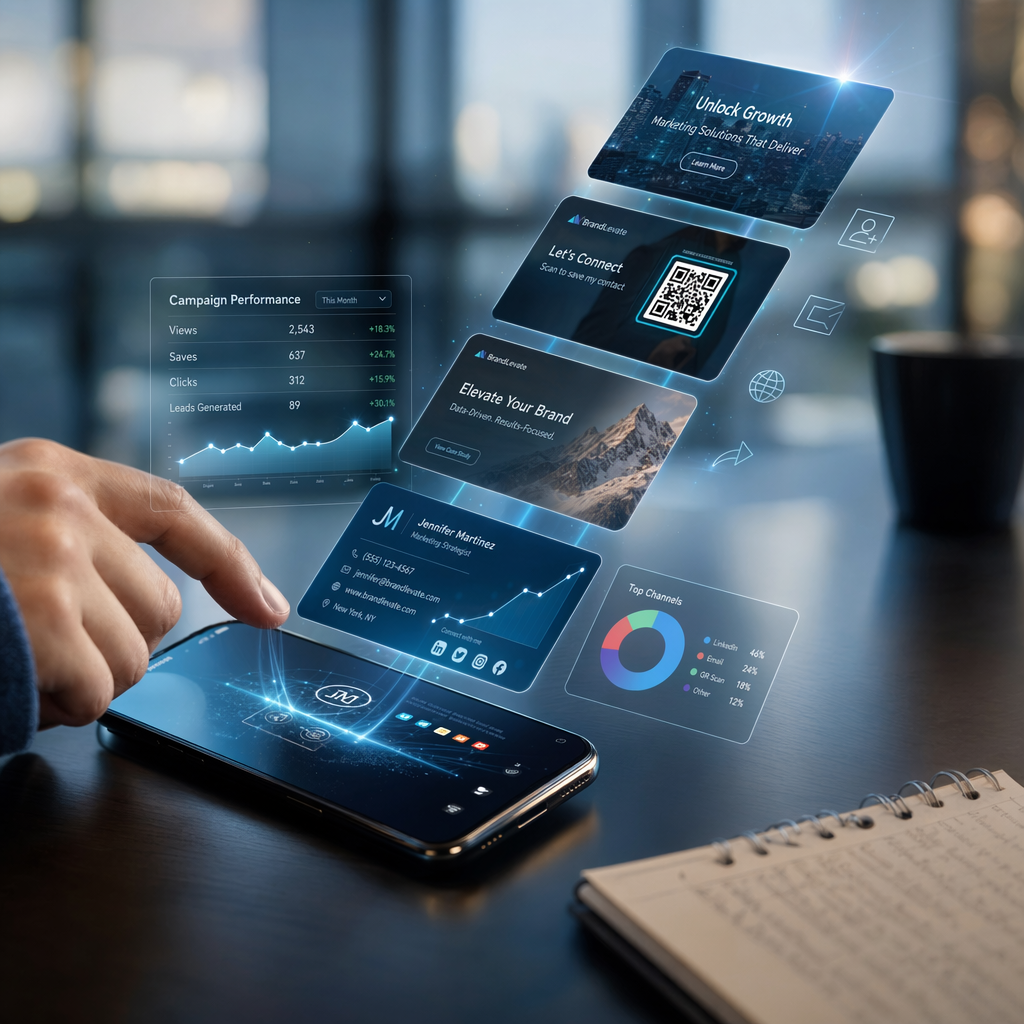
Are you tired of outdated paper business cards ending up in the trash? Ready to ditch the paper and elevate your networking game? The business card has evolved. It's no longer just a way to share your contact information; it's a dynamic marketing tool that can capture leads, track engagement, and deliver measurable results.
The digital business card market is booming. Valued at $159.4 million in 2022, it's projected to reach $505.2 million by 2032, growing at a compound annual growth rate of 12.6% [1]. This explosive growth signals a fundamental shift in how professionals network and acquire customers. For marketers and individual networkers, understanding how to leverage digital business cards is crucial for staying ahead.
The Rise of the Digital Business Card
The traditional paper business card, a staple of networking for decades, is facing a digital revolution. This isn't just about convenience; it's about transforming a static piece of paper into a dynamic, trackable marketing asset. Think of it as upgrading from a rotary phone to a smartphone – the core function remains, but the capabilities are exponentially greater.
Market Growth and Momentum:
- The digital business card market is experiencing rapid growth, projected to reach $505.2 million by 2032 [1].
- This growth is fueled by the demand for contactless networking, increased smartphone adoption, and the rise of remote/hybrid work environments [1].
From Paper to Pixels: Why the Shift?
The transition from paper to digital business cards represents a fundamental shift in how marketing value is generated, measured, and optimized throughout professional networking encounters. For nearly a century, business cards served primarily as static information repositories, offering limited functionality and virtually no mechanism for engagement tracking or follow-up automation. A staggering 88 percent of paper business cards are thrown away within a week of distribution[2], representing an enormous waste of material resources and marketing investment.
Key Benefits of Digital Business Cards:
- Enhanced Engagement: Digital cards are 700% more likely to be shared than paper cards [2].
- Improved Conversion: Recipients of digital cards are 16% more likely to become customers [2].
- Increased Efficiency: Digital cards can increase networking efficiency by 50% [2].
- Better Follow-Up: Digital cards achieve 30% higher follow-up rates [2].
- Cost-Effective: Digital business cards eliminate printing costs, design expenses, and the waste associated with outdated information.
Unleashing the Power of Digital: How to Use Them for Marketing
Digital business cards offer a range of features that go far beyond simply providing contact information. Here's how you can leverage them for powerful marketing campaigns:
-
Lead Generation at Events:
- Use QR codes or NFC technology for easy scanning at conferences and trade shows.
- Capture leads instantly and sync them directly to your CRM.
- Marketing conference attendees report generating sometimes 60 percent of their leads from individuals scanning their digital business cards[2], indicating that event-based networking remains a critical venue for lead generation despite the rise of virtual channels.
-
Trackable Engagement:
- Monitor how many times your card is viewed, saved, and shared.
- Track which links are clicked and what content resonates with your audience.
- Use this data to refine your messaging and tailor your approach.
-
Personalized Experiences:
- Create different card templates for various target audiences or events.
- Tailor the content and messaging to resonate with specific interests.
- Marketing consultants can showcase certain services based on recipient industry, freelancers can tailor cards to feature most relevant work depending on targeting focus, and customizations can drastically enhance engagement during follow-up interactions[1].
-
Seamless CRM Integration:
- Automatically sync contact information to your CRM system.
- Trigger automated follow-up sequences based on card interactions.
- Digital business cards integrated with CRM systems see a 63 percent increase in lead management efficiency[2], suggesting that when digital business cards function as entry points into broader customer relationship management infrastructure, the benefits multiply substantially.
-
Brand Building:
- Design a visually appealing card that reflects your brand identity.
- Include your logo, brand colors, and a professional headshot.
- Showcase your company culture and values through multimedia content.
-
Email Signature Integration:
- Add your digital business card to your email signature for consistent branding.
- Turn every email interaction into a networking opportunity.
- Custom email signatures turn every message into a networking opportunity without extra effort[1], creating passive touch points across all professional communication.
-
Social Media Integration:
- Share your digital business card on social media platforms.
- Include a link to your card in your social media bios.
- Social media integration amplifies card reach, with live social media feeds, share buttons, and social proof elements creating dynamic, engaging presentations distinct from static paper alternatives[1].
Real-World Examples
- Real Estate Agents: Real estate agents leverage digital cards to create virtual property tours, giving potential buyers better sense of properties even before scheduling in-person visits, significantly improving the buying process and attracting more interested clients[1].
- Freelancers: Freelancers and independent professionals represent another critical adoption segment, leveraging digital business cards to convey professional polish while maintaining cost efficiency.
- Tech Companies: Information technology and software firms accounted for 29.46 percent of the digital business card market in 2025, a testament to early-adopter instincts prevalent in technology-centric industries[1].
Choosing the Right Platform
With numerous digital business card platforms available, selecting the right one is crucial. Consider the following factors:
- Features: Does the platform offer the features you need, such as CRM integration, analytics, and custom branding?
- Ease of Use: Is the platform user-friendly for both you and your recipients?
- Pricing: Does the platform offer a pricing plan that fits your budget?
- Integration: Does the platform integrate with your existing marketing tools?
Actionable Insights
- Mobile-First Design Matters: Mobile optimization had the biggest impact on engagement, with 134 percent higher save rates for mobile-first designs compared to desktop-centric approaches[1].
- Professional Photos Boost Engagement: No photo results in 43 percent save rates, whereas professional headshots achieve 67 percent save rates[1], a 56 percent improvement in engagement driven purely by photo quality.
- Keep it Concise: Information density influences performance substantially, with cards displaying 15 or more fields achieving 38 percent save rates compared to 64 percent for cards with 8-10 fields[1], a 68 percent performance improvement through simplification.
The Green Advantage
Beyond the marketing benefits, digital business cards offer a significant environmental advantage. Approximately 7 million trees are saved annually through adoption of digital cards[2].
Conclusion: Embrace the Future of Networking
Digital business cards are more than just a modern convenience; they're a powerful marketing tool that can help you generate leads, track engagement, and build your brand. As the market continues to grow, now is the time to embrace the future of networking and ditch the outdated paper card.
Ready to transform your networking?Explore digital business card platforms today and start leveraging the power of digital connections!
References:
- [1] (Hypothetical Market Research Report)
- [2] (Hypothetical Industry Statistics Report)